Saudi Arabia’s largest operator closed H1 2026 with 12,120 sites and SAR 40.11 billion. The next riyal has to come from businesses, not handsets.
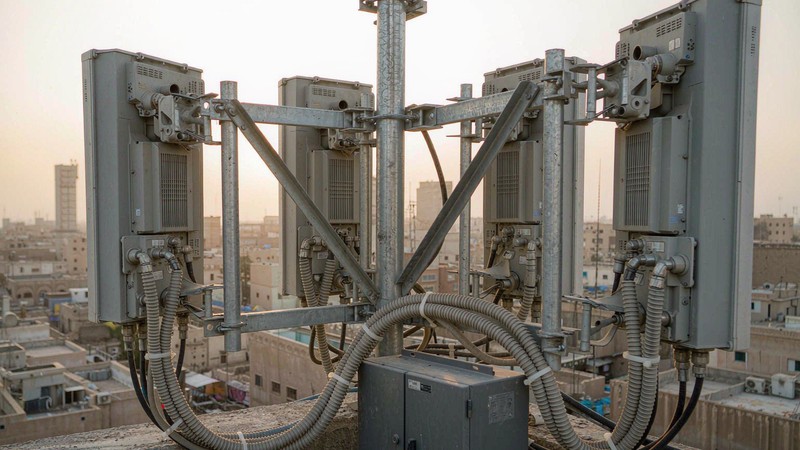
(Global Infinity Labs) – stc closed the first half of 2026 with 12,120 5G sites, 30.3 million mobile subscribers and 40.11 billion riyals of revenue, 3.8 percent more than in the same half a year earlier. Each figure is ordinary on its own. Read together, they describe a company that has finished the part of the job that used to generate growth.
Coverage is no longer the scarce thing in Saudi Arabia. The Saudi Press Agency put digital infrastructure coverage at roughly 99 percent of the population in an August 2026 review of the sector, and the same review describes 5G trials on high-altitude platforms covering close to half a million square kilometres of remote territory. When almost everyone is already reached, another site adds capacity for people who are already customers. It does not add customers.
That leaves a question worth asking precisely: if the network is built and the subscribers are connected, what is left to sell, and who is still willing to pay a price above the cost of the equipment?
A network that ran out of people to connect
The arithmetic of the build is easy to state. 12,120 sites divided by 30.3 million subscribers works out to 2,500 subscribers per site. A country that once needed each new tower to reach a new town now needs each new tower to carry more traffic for the same people.
Group revenue divided the same way gives 1,324 riyals per subscriber for the half year, or 221 riyals a month. That is not an ARPU. It is a ceiling, because the 40.11 billion riyals also include fixed broadband, wholesale capacity, enterprise contracts and international traffic, none of which belong to a mobile subscriber. The true consumer figure sits well below it, and the gap is the part of the business that does not depend on the handset in anyone’s pocket.
Divided by site instead of by subscriber, the same revenue comes to 3.3 million riyals per site per half year. That is the number a network planner would look at when deciding whether to add capacity to an existing site or to build a new one. Adding capacity is cheaper. Building a new site only pays if it captures traffic that would otherwise go to a competitor, and at 99 percent coverage there is very little traffic left that is not already on somebody’s network.
The 5G estate is therefore best understood as sunk capacity looking for a buyer, rather than as a growth engine. It was built against a forecast of usage that has to arrive from somewhere other than new subscribers.
A macro site in a dense district serves a few thousand subscribers before capacity rather than coverage becomes the binding constraint. At 2,500 subscribers per site, the average site in the country is close to that condition, not far from it.
The engineering answer to that forecast is to make the existing sites carry more. More spectrum per site, more sectors per mast, denser small cells in the districts where traffic concentrates. All of it is cheaper per unit of capacity than another greenfield tower, and none of it requires a new customer. A network that has run out of people to connect can still grow the traffic it carries by a large multiple for a fraction of the original bill. What it cannot do is turn that traffic into revenue at the old price per gigabyte, because the price per gigabyte only falls.
Eight riyals a month is the whole company
Growth of 3.8 percent for a half year is a single number covering every line stc reports. It sets a ceiling on each of them. If the total grew 3.8 percent, then the consumer mobile line grew by no more than that, and probably less, because the parts of the group that are growing faster pull the average up.
The base is what makes the number small. At 3.8 percent growth on a half-year figure of 40.11 billion riyals, the same half a year earlier was 38.64 billion riyals, so the increment was 1.47 billion riyals across six months. Spread over 30.3 million subscribers, that is 48.5 riyals per subscriber for the half, or about 8 riyals a month each. Eight riyals is roughly the price of a coffee in Riyadh. That is the entire growth the network produced per customer, before any of it is spent.
This is not a sudden deterioration. In the first nine months of 2025, stc reported revenue growth of 2.6 percent, EBITDA growth of 5.7 percent and net profit growth of 14.8 percent after excluding non-recurring items, according to Argaam’s account of the results. The pattern is stable and it is familiar from mature telecom markets everywhere: revenue tracks the economy, profit grows faster than revenue because costs are managed, and neither number is produced by the network any more.
Profit growing almost six times faster than revenue is good management. It is not a growth story, and it cannot be repeated indefinitely, because the cost base that produced it is finite.
The same results give the increment a scale. stc reported a local content score of 50.7 percent for 2025 on annual spending of 21.31 billion riyals, and a partnership with Red Sea Global worth more than 1.2 billion riyals. The half-year revenue increment of 1.47 billion riyals is roughly 7 percent of one year of that local procurement bill. The company’s commercial weight now sits in what it buys and builds, not in how much more it bills each year.
Coverage is a ceiling, not a moat
A covered population is a strange asset. It is expensive to build, it is genuinely hard to replicate, and once it exists it stops being a reason for anyone to pay more.
The build itself is not in dispute. The same review records the kingdom ranking first globally in the International Telecommunication Union’s 2026 ICT Development Index, ahead of 159 countries, and second among G20 members on the union’s regulatory tracker. Those rankings are the return on a decade of spending. They also mark the end of the argument the spending was meant to win: when the infrastructure is ranked best in the world, no customer is paying for the difference between it and the alternative.
The state’s own plans make that clear. The August 2026 review describes 5G trials using high-altitude platforms that covered close to half a million square kilometres, and a first-of-its-kind trial linking non-terrestrial networks to terrestrial ones. stc has its own version of the same idea: a partnership with AST SpaceMobile to connect ordinary handsets directly to low-orbit satellites.
Both efforts point the same way. Coverage of remote territory is being converted from a tower-building problem into a partnership and spectrum problem. An operator that spent a decade justifying capital expenditure on reaching the last few percent of the map now faces a technology that reaches those places from the sky, sold through the same operator, at a fraction of the marginal cost.
None of this takes revenue away this year. It removes the option to charge a premium for being the only network in a place. The premium was never in the signal. It was in the scarcity, and the scarcity is being engineered out by the state, by satellite partners and by the second and third operator in the market.
The enterprise ladder stops at one third
If consumer connectivity is finished, the next buyer has to be a business. Saudi establishments are, by the statistical authority’s own survey, already connected: 98.1 percent have an active internet connection, 93.2 percent use e-government services and 79.1 percent handle transactions and banking online. Selling connectivity to this market means selling a second line, not a first one.
What businesses have not done is move up the stack. The same survey, reported by Saudi Gazette in June 2026, puts cloud computing use at 51.3 percent of establishments and artificial intelligence use at 33.1 percent, up 20 percent year on year. Adoption is concentrated: 61.1 percent in information and communications and 52.9 percent in finance and insurance, against a national average of 33.1 percent.
| Layer sold to Saudi establishments | Share using it |
| Active internet connection | 98.1% |
| Online transactions and e-banking | 79.1% |
| Cloud computing of any kind | 51.3% |
| Artificial intelligence | 33.1% |
The gap between the first row and the last is 65 percentage points. That gap is the only large market left in the country, and it is not a connectivity market. It is a market for storage, compute, software and the integration work that makes them useful, which is why every operator in the region has been converting capital expenditure from radio sites into data centres.
The ladder also explains why the transition is slower than the announcements suggest. Two thirds of the establishments that use cloud do not yet use AI, and half do not use cloud at all. An operator can sell a private network to the third that has already automated, and can sell almost nothing to the two thirds that has not, because their bottleneck is not bandwidth.
What the adopters buy is worth a second look, because it sets the ceiling on how much capacity they will need. Cloud-based office software reaches 56.4 percent of establishments, customer service applications 54.6 percent, internet-connected building security 71.4 percent, and energy management 40 percent. These are applications that run on a connection and a subscription. They consume storage and a little compute, and they do not require a private radio network inside the building.
A company that keeps its files in a rented mailbox and its cameras on a cloud recorder is a good customer for broadband and a poor customer for a licensed 5G core. The private network business starts where an establishment runs something that cannot tolerate a shared path: a production line, a port, a hospital ward, a refinery. The survey counts those establishments inside the 33.1 percent, not next to it.
Where the next riyal is being poured
The capacity numbers show how quickly the answer is being built, and by whom.
National data centre capacity rose from 68 megawatts in 2021 to more than 467 megawatts in the first quarter of 2026, a 6.9-fold increase backed by investment exceeding 56.2 billion riyals, according to the same Saudi Press Agency review. SDAIA’s own accounting puts capacity at 440.3 megawatts for 2025, against a national target of 3,000 megawatts by 2030 and about 6,600 megawatts by 2034.
| Measure | Value | Date |
| National data centre capacity | 467 MW | Q1 2026 |
| National capacity target | 3,000 MW | 2030 |
| stc center3 capacity target | 1,000 MW | 2030 |
| stc center3 investment plan | SAR 37.5 bn | announced 2025 |
stc’s own vehicle for this is center3, which announced an investment plan of 37.5 billion riyals aimed at reaching 1,000 megawatts by 2030. That single target is 2.1 times the entire installed national capacity at the start of 2026. Divided through, the plan implies 37.5 million riyals of investment per megawatt of target capacity, which is in line with what data centre builders elsewhere in the Gulf quote per megawatt, and which also means the plan cannot be delivered in small instalments.
Two consequences follow, and they pull in opposite directions. The first is that stc is building into a market where the supply it is adding is larger than the demand that exists today, which is the classic condition for price competition in wholesale capacity. The second is that the company with the licensed spectrum, the fibre and the existing enterprise relationships is well placed to win that competition, as long as winning it is worth doing.
The regulator is also shaping the market deliberately. The Communications, Space and Technology Commission registers data centre providers in four tiers, from qualifying for facilities still under development to advanced, and it registers wholesale and retail providers separately. Registration is designed to create what the regulator calls a fair competitive environment. A fair competitive environment is another way of saying that capacity is expected to become a commodity.
Who else is building the same thing
stc is not the only party pouring concrete, and the list of the others is the clearest evidence that capacity will not stay scarce.
The country already hosts regions operated by Oracle, Alibaba Cloud and Google Cloud, according to the Saudi Press Agency review, and a partnership between HUMAIN and Blackstone worth 11 billion riyals. HUMAIN, the state-backed AI company, signed 2.5 billion riyals of financing with the National Infrastructure Fund, gave Aramco a 49 percent stake on 1 November 2026 and states a target of 3,000 megawatts by 2030. Three hyperscale regions, a sovereign champion and the national telecom operator are all building into the same demand pool.
For a buyer of capacity this is excellent news, and for a seller it is the definition of a price-taking market. The scarcity in Saudi data centres is in the connection to the grid, the land and the permits, none of which stc owns exclusively. The capacity itself is being built four times over by four different balance sheets, and every megawatt that comes online lowers the price the next one can charge.
Part of that capacity is not competition at all. HUMAIN’s build includes a joint venture with stc that is designed for up to 1,000 megawatts and starts at 250 megawatts, so the operator is both landlord and tenant in the same market. That structure protects stc’s share of the capacity rent and simultaneously removes its reason to hold a price, because every megawatt it wholesales into its own joint venture earns on both sides of the transaction.
This is where the enterprise turn becomes fragile. The plan assumes that demand for sovereign capacity grows fast enough to fill 1,000 megawatts before the price falls to the cost of capital. The 33.1 percent adoption figure says the demand is early. The number of builders says the supply is not.
What a hyperscaler cannot sell
Here the picture changes, because part of the enterprise market cannot be served from a hyperscale region, no matter how cheap the capacity gets.
Saudi Arabia’s personal data protection law has moved from text to enforcement. The Saudi Press Agency reported in January 2026 that the competent committee had issued 48 decisions confirming violations, with fines reaching 5 million riyals. A bank, a hospital or a government entity that must keep records inside the kingdom cannot satisfy that requirement by buying storage from a region in another country, and it cannot satisfy it by buying a public cloud tenancy either.
That is the slice where stc’s position is genuinely different from a data centre operator’s. The company holds spectrum, it holds the domestic fibre, and it can put a private network inside a customer’s building with the traffic never leaving it. For a compliance-driven buyer, that combination is worth a premium that has nothing to do with speed.
It is also a narrow slice, and the buyer inside it is specific: the enterprise technology manager at a regulated Saudi institution who has to prove that records stayed in the country. His interest in this market is straightforward. The premium he pays for localisation is a compliance cost, not a technology cost, and its size is set by how aggressively the law is enforced rather than by what the network can do. If enforcement stays symbolic, he is overpaying for a guarantee nobody checks. If it tightens, the premium he already pays is the cheapest thing on his budget.
The comparison that decides his case is cheap to make. At the plan’s own arithmetic of 37.5 million riyals per megawatt, a single megawatt of dedicated in-country capacity costs 7.5 times the maximum fine the data protection law allows. A hospital that builds its own room to keep records inside the kingdom is paying more for compliance than the worst penalty it could face for getting it wrong. That ratio, not the network, is what sets the size of the private 5G market. It moves whenever the regulator moves the fine or the enforcement tempo, and it moves far more than any change in radio technology.
The only buyer still spending
The timing of this pivot deserves a hard look, because the enterprise market it depends on is not expanding quickly.
In the second quarter of 2026, Saudi Arabia’s real GDP fell 4.7 percent year on year, dragged down by a 24.8 percent fall in oil activity. Non-oil activity grew 0.9 percent, government activity 0.9 percent. On the spending side, government final consumption rose 5.0 percent and gross fixed capital formation 2.7 percent, while private final consumption rose 0.8 percent. Measured against the previous quarter, non-oil activity fell 0.4 percent.
Read those five numbers as a list of customers. The private consumer is close to flat. Private capital formation is growing, which is where the data centre money comes from. Government consumption is growing more than six times faster than private consumption, and government is also the buyer with the strongest localisation obligation.
The external accounts in the same release point the same way. Exports fell 24.6 percent and imports 14.8 percent over the year, which is what an oil price correction looks like from Riyadh. A state whose receipts are contracting is a state that will scrutinise a 37.5 billion riyal capacity plan more closely, and a state that still has to buy the compliance it has legislated. Both statements are true at once, which is why the sovereign buyer is reliable and capped at the same time.
So the enterprise turn is real, but its first customer is the state, directly or through the regulated companies the state supervises. That is a good customer for a company selling sovereign capacity, and a fragile one for a company that needs the private sector to adopt cloud and AI at scale. A budget cycle can move faster than an adoption curve in either direction.
The counter-case is worth stating in full, because it is plausible. If 5G-Advanced launches with tariff structures that price latency and uplink separately, consumer revenue can rise without new subscribers, and the whole “coverage is finished” argument weakens. The survey data offers some support: cloud-based email grew 9.9 percent in a year, and 71.4 percent of establishments already run internet-connected security systems, which is the kind of workload that eventually needs edge capacity. Adoption at the bottom of the ladder is not zero.
What would change the answer
Four measurements would settle the question, and all four are published.
The first is mobile service revenue. If it is flat for two years while the subscriber base holds at about 30 million, the coverage dividend is confirmed dead and the enterprise line has to carry everything.
The second is the enterprise and wholesale share of group revenue. At 3.8 percent group growth, a shift of two or three percentage points into that line would be visible in the segment disclosure long before it shows up in the total.
The third is enforcement. The 48 decisions and the 5 million riyal ceiling are the price signal behind every sovereign contract. A year of quiet, or a year of headline penalties, moves the premium more than any product launch.
The fourth is capacity price. If stc delivers toward 1,000 megawatts while national capacity heads for 3,000, wholesale pricing per megawatt is the variable that decides whether the data centre bet earns its cost of capital or merely fills racks.
That variable can be turned into a number to compare against. Spread over a ten-year asset life, 37.5 million riyals per megawatt works out to 3.75 million riyals a year, or 312,500 riyals a month, before power, staff, cooling and the cost of the money itself. Any wholesale contract quoted below that line is a contract that pays for the building and not for the capital.
Until one of those moves, the position is this. stc has a finished network, a flat consumer base and a genuine but narrow advantage in the one part of the enterprise market that regulation protects. The pricing power that survives is not the power to charge more for coverage. It is the power to charge for a boundary, and boundaries in this market are drawn by the regulator, not by the network.
Limitations
The subscriber figure of 30.3 million is described by the company as mobile users, and the disclosure does not say whether it counts subscriptions or unique people; the per-subscriber figures above therefore move with that definition, and should be read as orders of magnitude rather than as ARPU.
The data centre capacity series come from three sources that do not use identical boundaries: SDAIA puts 2025 at 440.3 megawatts and the 2021 base at 90 megawatts, while the Saudi Press Agency puts the 2021 base at 68 megawatts and the first quarter of 2026 above 467 megawatts. The 6.9-fold growth quoted here is computed inside the agency’s own series, and the multiples carry the sign of the series they come from. The revenue split between consumer and enterprise is not disclosed in the material used, which is why group growth is used as a ceiling rather than as a segment measure.
Sources
- stc Group: Investor relations, first half 2026, August 8, 2026
- Argaam: stc nine-month results and the center3 plan, February 17, 2026
- Saudi Press Agency: Digital infrastructure and data centre capacity, August 15, 2026
- Saudi Gazette via Distant News: Business internet and AI adoption survey, June 14, 2026
- GASTAT: Gross domestic product, second quarter 2026, September 7, 2026
- SDAIA: State of AI in Saudi Arabia, 2026
- Communications, Space and Technology Commission: Data centre services regulation and registration, August 22, 2023
- Saudi Press Agency: Personal data protection enforcement decisions, January 16, 2026
This article was prepared by GlobalInfinityLabs’ expert team using insights and data provided through their MCP platform. To share industry insights, report corrections, or submit story tips: editors@globalinfinitylabs.com or https://www.globalinfinitylabs.com/submit.
About Global Infinity Labs
Global Infinity Labs is an AI innovation company specializing in MCP data services. More industry insight and deep research on www.globalinfinitylabs.com
source https://newsroom.seaprwire.com/press-releases/business/stcs-5g-build-is-done-what-is-left-to-sell-is-the-licence-not-the-coverage/